
Historic Wood Floor Restoration in Bakersfield, CA
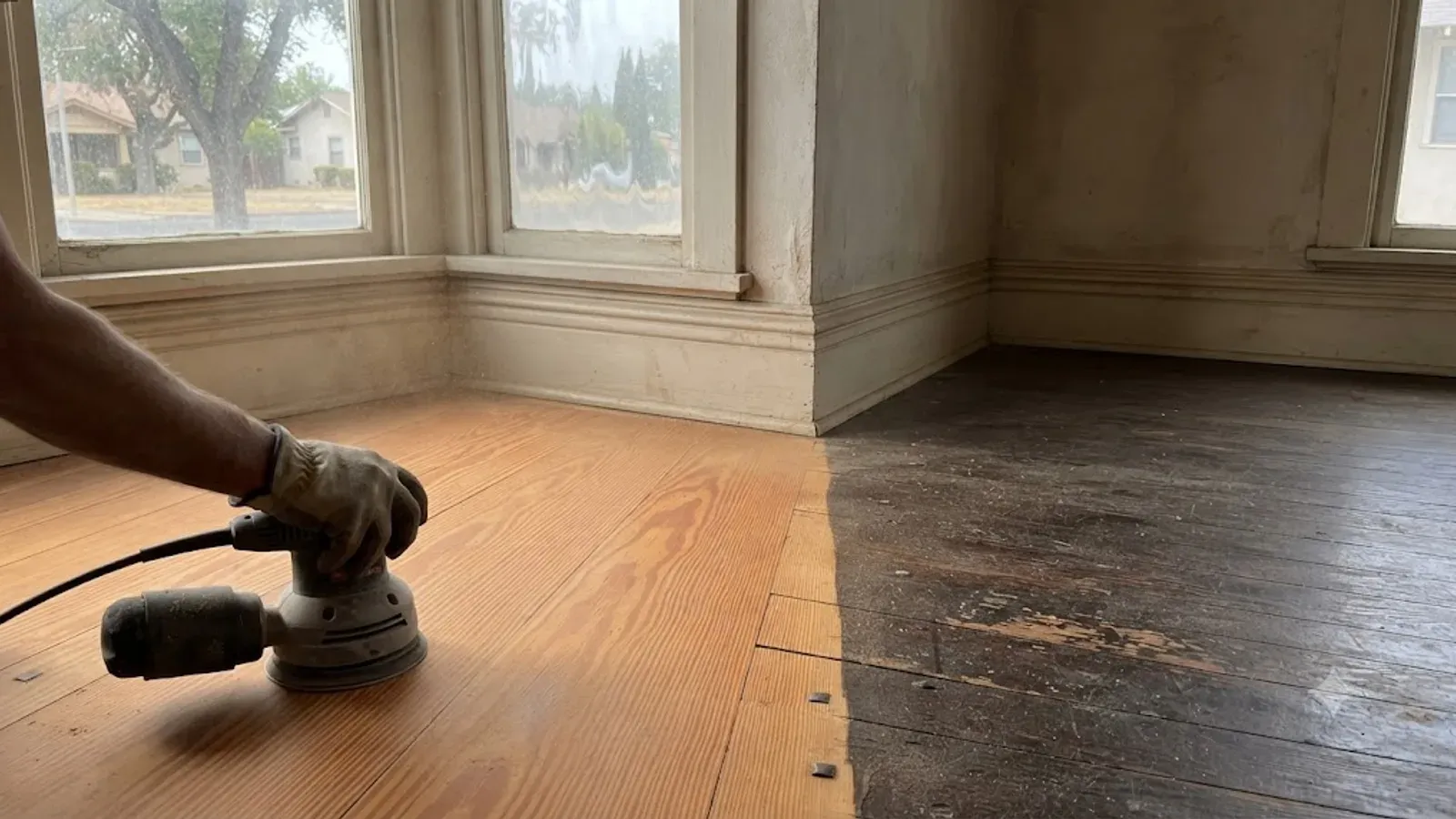
Bakersfield Premium Wood Flooring handles historic wood floor restoration in Bakersfield, CA — the old-growth vertical-grain Douglas fir and quartersawn oak in the city's pre-war housing stock. That wood is thinner, softer, and completely irreplaceable, so it gets a different grit sequence and a lot more patience than a modern oak floor.
Developer Henry J. Brandt subdivided much of the Oleander and Sunset tracts starting in 1916, and the bungalows that went up there through the 1920s and 30s were floored with timber milled from forests that no longer exist. Thirty growth rings to the inch is common. You cannot buy that at any price today.
Old-Growth Douglas Fir in Pre-War Bakersfield Homes
Pull the carpet in a bungalow off Oleander or a Craftsman over in Westchester and there is a good chance what is underneath is vertical-grain Douglas fir. Tight, straight, parallel grain lines running the length of the board, amber where the finish has aged, gray where it has oxidized.
That grain density is the whole point. Old-growth timber grew slowly in dense forest, which produced wood that is harder, more stable, and far more attractive than the fast-grown fir milled today. Modern fir has wide, wandering growth rings and dents if you look at it. The two products share a name and almost nothing else.
What that means practically is that a historic fir floor is worth restoring even when it looks terrible. Under a hundred years of shellac, wax, carpet pad residue, and valley dust there is usually a floor that will surprise the homeowner and everyone who walks in afterward.
The complication is thickness. These floors are frequently three-eighths or half-inch stock rather than the three-quarter-inch that became standard later, and many have already been sanded once or twice. Before we commit to a full sand we pull a floor vent or a threshold and look at the board in cross section, because there is a real number of sanding cycles left and it is not infinite.
Restoration Technique for Soft, Thin Historic Floors
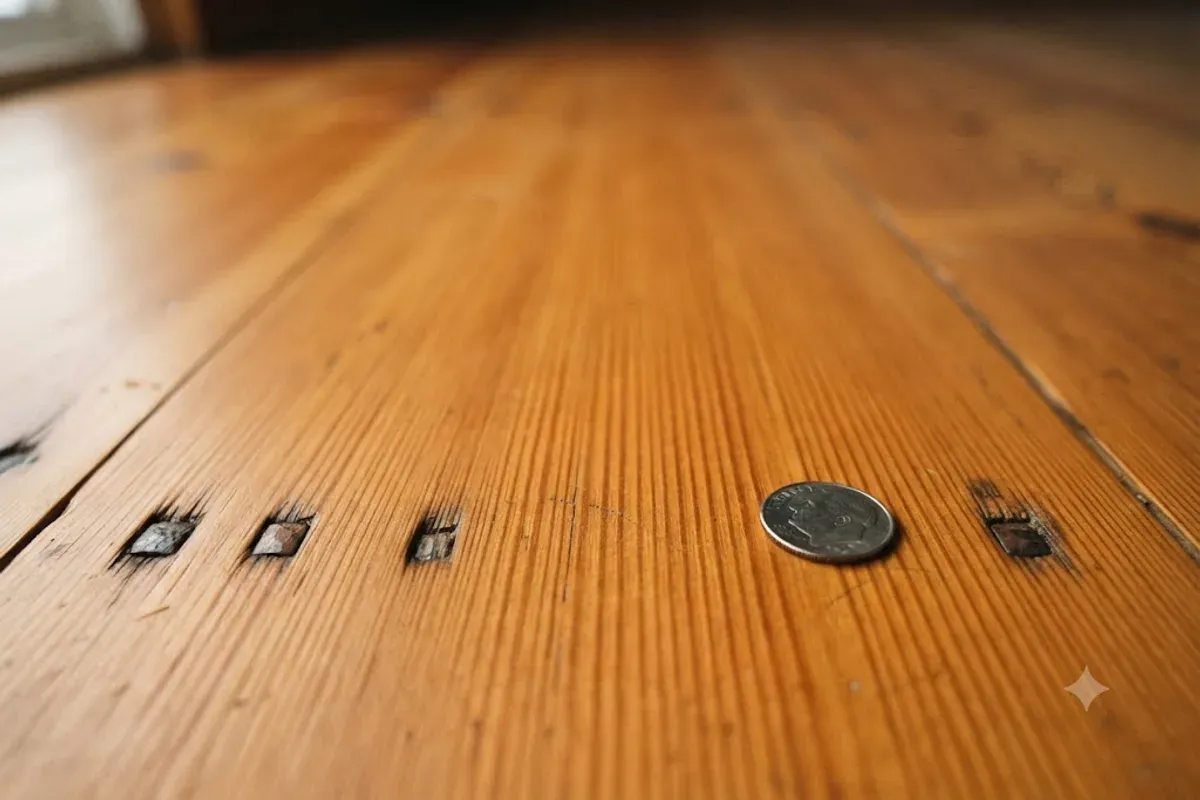
Fir is soft. It dents under a dropped fork and it burnishes under a sander that is moving too slowly, which glazes the surface and causes the stain to blotch. Sanding it like an oak floor is the most common way these floors get ruined by people with good intentions.
So we change the approach. Sharper paper changed more often, because dull abrasive generates heat and heat is what burnishes. A lighter cut pass, sometimes starting at 50 or 60 grit rather than 36, accepting that a few marks will stay rather than chasing them and losing an eighth of an inch of irreplaceable wood. More hand-scraping, because the edger is aggressive on soft wood.
We also leave character. A restored historic floor should not look like it was installed last week — the dents, the patina variation, the small gaps between boards are part of what makes it worth having. Chasing perfect flatness on a hundred-year-old fir floor means sanding away the floor.
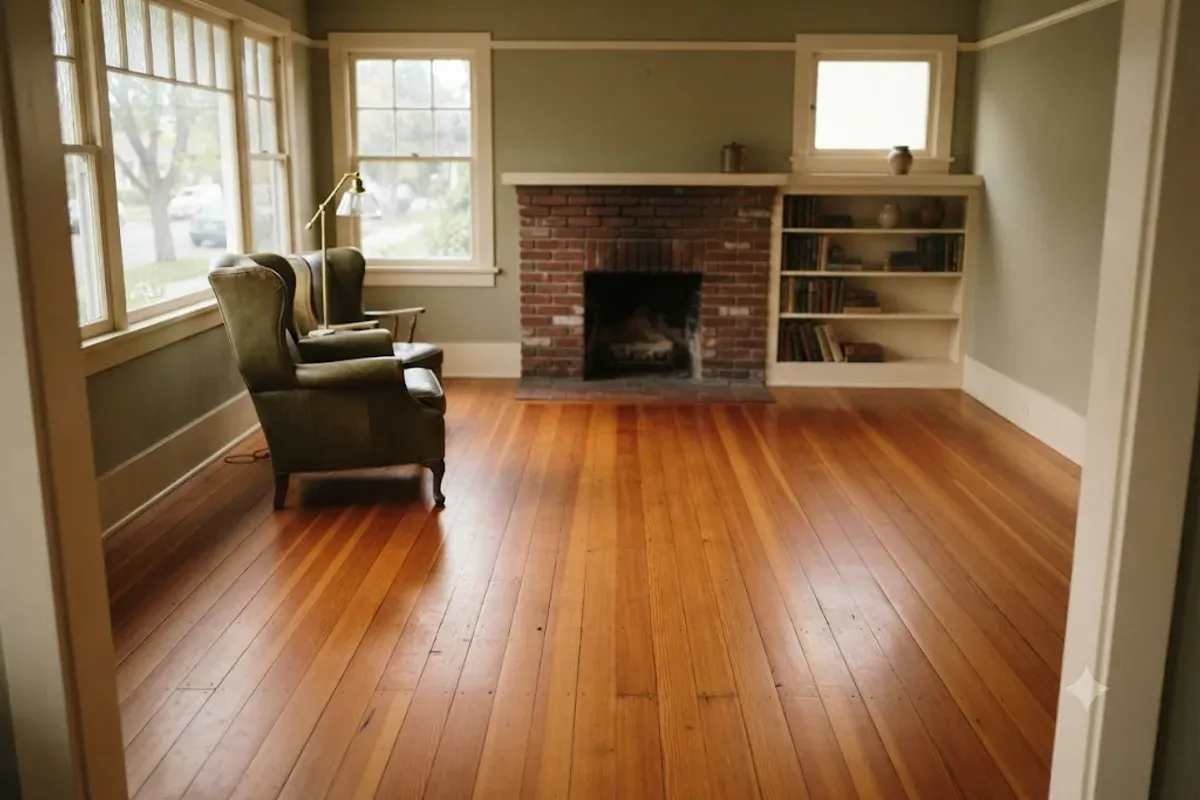
Finish selection is its own decision. Fir takes stain unevenly and dark stains in particular tend to muddy the grain that makes the wood worth restoring in the first place. Nine times out of ten we finish fir natural — a penetrating sealer and a satin waterborne topcoat — and let the amber come from the wood itself as it ages back.
Carpet Removal, Tack Strip Damage and Historic Repairs
Most historic restorations start with carpet coming up, and carpet leaves evidence. A perforated border of tack strip holes around every room. Thousands of pad staples. Sometimes adhesive if a previous owner glued directly to the wood, which is the worst case and requires chemical removal before any sanding.
None of that is fatal. Tack strip holes sit within about half an inch of the wall and generally sand out or disappear under base shoe. Staples get pulled individually, by hand, which is a genuinely tedious day of work and one that has to happen before the sander touches the floor — a single staple will destroy a $60 abrasive belt and gouge the boards.
Repairs on these floors mean matching wood that is no longer manufactured. We keep a salvage inventory of period fir and oak pulled from closets, from under old cabinet runs, and from tear-outs, specifically so a 1926 bungalow can be patched with 1920s wood. When salvage runs short we mill new stock to the original width and profile.
Floor registers are the other historic detail worth preserving. Original cast iron floor grates set flush in the boards are frequently painted shut and assumed to be junk. Stripped and reseated they are one of the details that makes the room read as authentic, and they cost nothing to save.
How a Historic Restoration Runs
- 1
Assess Remaining Thickness
A vent or threshold comes up so we can see the board in cross section and count how many sanding cycles the floor honestly has left.
- 2
Carpet, Tack Strip and Staples
Carpet and pad out, tack strip pulled, and every staple removed by hand. One missed staple ruins an abrasive belt and gouges soft fir.
- 3
Test Patch
A small area sanded first so we can see what is actually under the old finish and confirm the grit sequence before committing to the whole room.
- 4
Repairs with Period Wood
Damaged boards replaced from salvage stock or milled to the original profile, laced in with staggered joints rather than blocked in.
- 5
Conservative Sanding
Lighter cut pass, sharper paper changed often, more hand-scraping. We remove the finish and the gray, not the character and not the thickness.
- 6
Natural Finish
Penetrating sealer and a satin waterborne topcoat in most cases, so the grain reads clearly and the amber comes from the wood rather than a stain.
Historic Floor Restoration — Common Questions
Is the wood under my carpet worth restoring?
+
What is old-growth Douglas fir and why does it matter?
+
Will tack strip holes and staples show after refinishing?
+
Can you match wood for repairs in a 1920s house?
+
Should I stain a historic fir floor dark?
+
Get a Free Historic Floor Assessment
We will pull a vent, check the remaining thickness, and tell you honestly whether the floor under your carpet is worth the money. Mon-Fri 7am-5pm, Sat 8am-2pm.