
Wood Floor Repair and Restoration in Bakersfield, CA
Bakersfield Premium Wood Flooring provides wood floor repair and restoration in Bakersfield, CA, with 19 years of putting damaged floors back together instead of tearing them out. Cracked boards, seasonal gapping, cupping, squeaks, pet damage, bad patches from a previous owner — most of it is fixable, and fixing it costs a fraction of replacement.
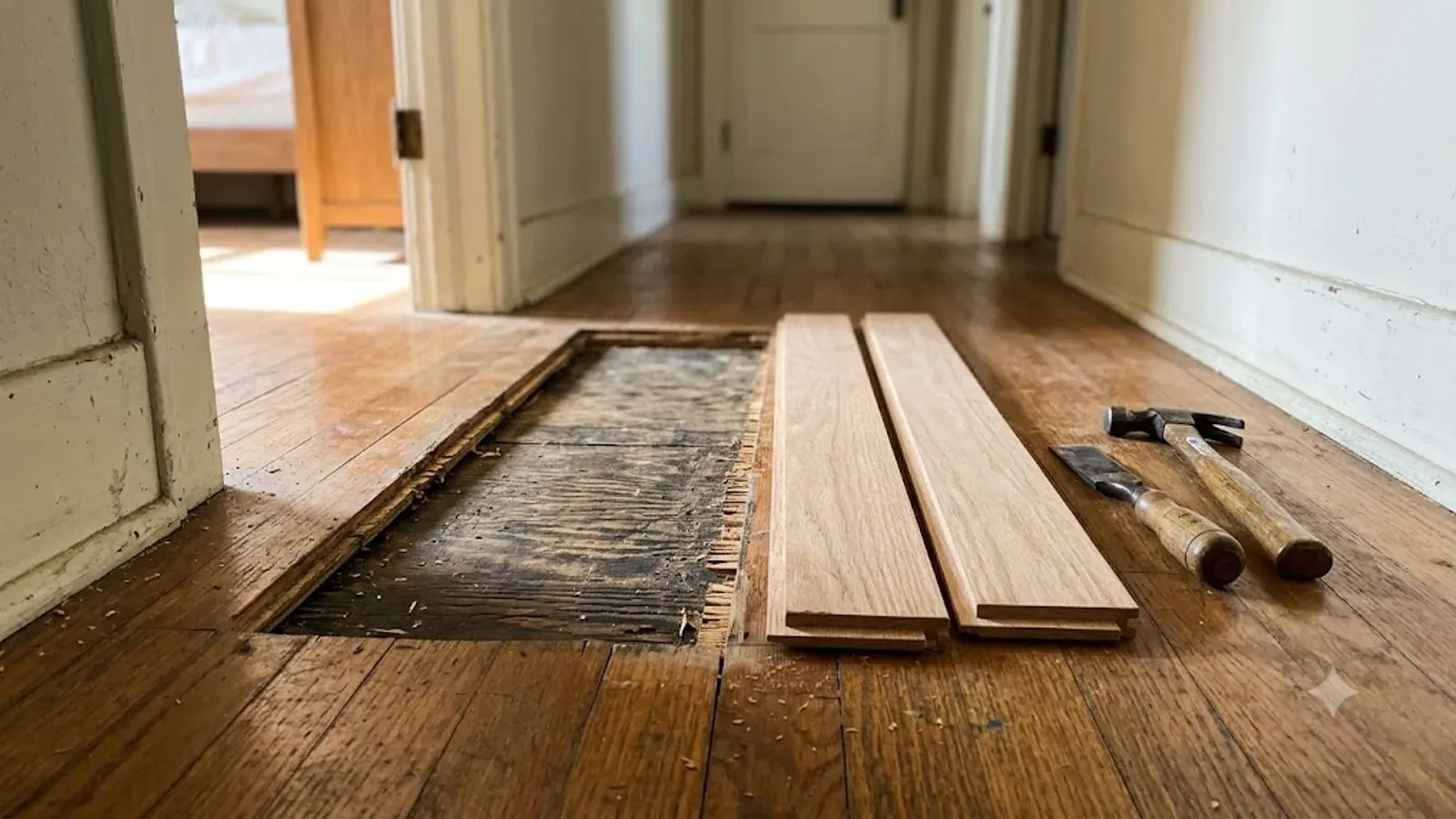
The hard part of a floor repair is not pulling boards. It is making the new wood disappear into the old. That means matching species, cut, width, and grain direction, then lacing the boards in with staggered joints so there is no rectangle in the middle of your living room.
Wood Floor Damage We Repair and What Causes It
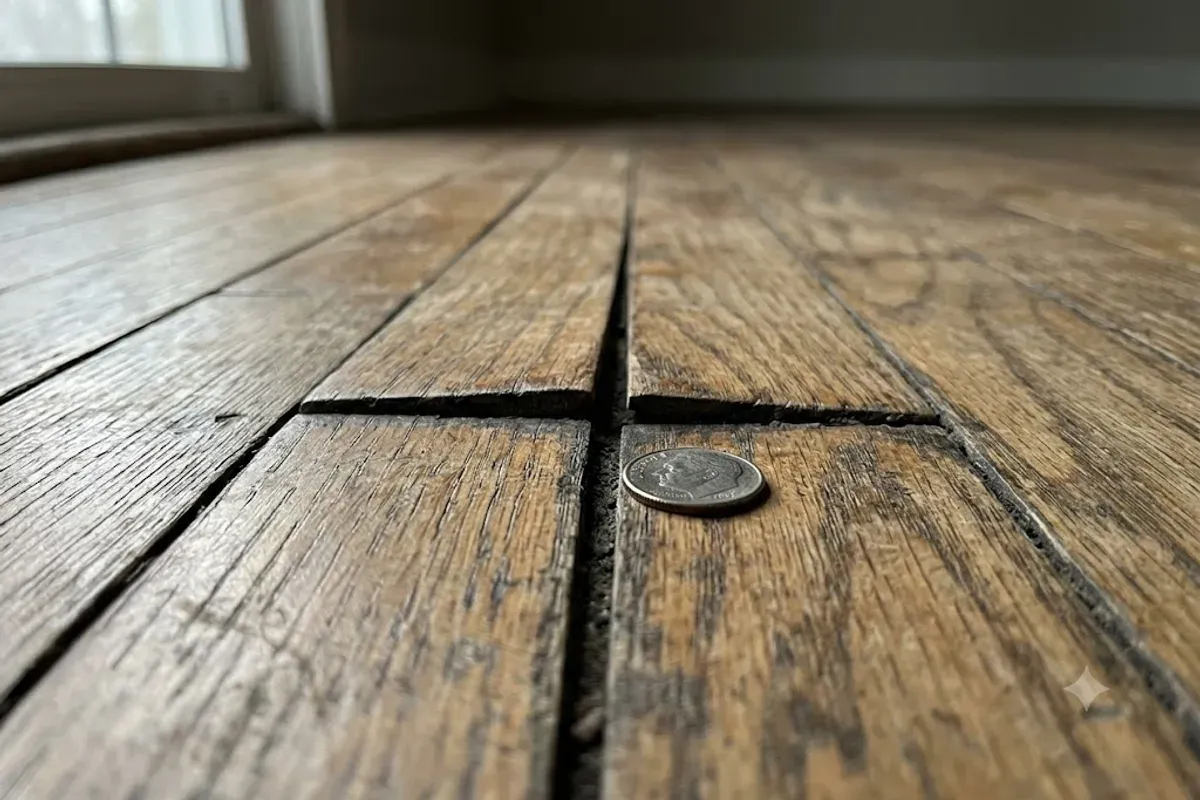
Gapping is the most common call we get in Bakersfield, and it is usually misdiagnosed. In most of the country floors gap in winter when the heat runs. Here, our worst gapping season is late summer, when outdoor humidity drops into the teens and the house dries out. Boards shrink across their width, seams open, and by August you can drop a dime into them.
Cupping is the opposite problem and it means moisture, not age. When the underside of a board is wetter than the top, the edges rise. In this valley that points to a slab leak, a supply line, a dishwasher, or an evaporative cooler that overflowed. Sanding a cupped floor before it has dried is the single most expensive mistake in this trade, because once it dries flat you have crowned boards instead.
Squeaks are movement. Board against subfloor, subfloor against joist, or a nail working itself loose in wood that has shrunk. On raised-foundation homes north of the Kern River we usually fix them from the crawl space with shims and adhesive and never touch the finished floor. On slab homes it is trim-head screws from the top, countersunk and plugged with matching wood.
Then there is the damage people inherit. A patch where a wall came out, filled with the wrong species and running the wrong direction. A section of laminate someone laid in a bedroom. Face-nailed boards with putty over the holes. We see all of it, and most of it can be corrected without replacing the field.
Board Replacement, Lacing and Grain Matching
Replacing a damaged board sounds simple. It is not, because the board you are removing is locked to its neighbors on all four sides. We plunge-cut down the middle of the board, split it out in sections, clear the tongue and groove, then trim the underside groove off the replacement so it can drop in from above.
Matching is where the job is won or lost. Species first — red oak and white oak look nearly identical bare and completely different once stained. Then cut: plainsawn, riftsawn, and quartersawn wood have entirely different grain patterns, and dropping a plainsawn board into a quartersawn floor is instantly visible. Then width and thickness, which on pre-1950 floors often means milling stock down to a size nobody sells anymore.
For patches larger than a few boards we lace rather than block. That means staggering the new end joints into the existing field in an irregular pattern, the way the floor was originally laid, instead of cutting a clean rectangle and filling it. Lacing takes longer and uses more material, and it is the difference between a repair you cannot find and one you notice every day.
The last step is always refinishing the whole room, not just the patch. New wood and 80-year-old wood will never take stain identically, but sanded flat and coated together under the same finish they come out as one floor. Trying to spot-finish a patch is how repairs end up looking like repairs.
Restoration on Older Bakersfield Floors
Restoration is a different job from repair. It usually starts with carpet coming up in a pre-war bungalow off Oleander or a Craftsman over in Westchester, revealing vertical-grain Douglas fir that has not seen daylight since 1968. Under the pad residue and the tack strip holes there is generally a floor worth saving.
That wood is not replaceable. Old-growth fir with thirty growth rings to the inch does not exist in the supply chain at any price, so restoration means being conservative. Lighter sanding passes, sharper paper, and accepting some character rather than chasing a perfectly uniform surface. A restored floor should look its age, just clean.
Carpet tack strips leave a perforated border around every room. Staples from the pad leave thousands of small holes. Both are normal and both disappear under a proper sand and finish. What does not disappear is a floor that has already been sanded three times by somebody who did not check first, which is why we pull a vent and look at the board edge before quoting.
We also salvage. We keep stock pulled from closets, under old cabinet runs, and from jobs where a room was being converted, specifically so we have period-correct fir and oak on hand when a bungalow needs a dozen boards nobody sells anymore.
How a Repair Job Runs
- 1
Diagnose the Cause
We meter the boards and the subfloor and find out why the damage happened. Repairing cupping without finding the leak is a guarantee you will call us again in six months.
- 2
Stabilize First
If there is active moisture, drying comes before any carpentry. Air movers, a dehumidifier, and daily meter readings until the numbers come back to normal.
- 3
Source Matching Wood
Species, cut, width, and thickness matched from stock or milled to size. On pre-1950 floors this often means our salvage inventory rather than a supplier.
- 4
Remove and Replace
Damaged boards plunge-cut and split out, subfloor inspected and repaired underneath, new boards laced in with staggered joints and fastened the way the original floor was.
- 5
Sand the Full Room
The repaired area and the original floor get sanded together as one surface, so there is no height difference and no visible boundary.
- 6
Finish and Blend
Stain if the room is stained, then coats across the whole room. The patch and the 80-year-old wood end up the same color because they were finished at the same time.
Wood Floor Repair — Common Questions
How much does it cost to repair hardwood floor boards?
+
Can you fix gaps in my hardwood floors?
+
Do I have to replace my whole floor if part of it is damaged?
+
Can squeaky floors be fixed without pulling up the boards?
+
How long does a typical floor repair take?
+
Get a Free Floor Repair Estimate
Send a photo taken from floor level in daylight and we will tell you what we are probably looking at, then come confirm it in person. Mon-Fri 7am-5pm, Sat 8am-2pm.