
Wood Floor Deep Cleaning and Recoating in Bakersfield, CA
Bakersfield Premium Wood Flooring provides wood floor deep cleaning and recoating in Bakersfield, CA for floors that are dull but structurally sound — which, by our count, is roughly one in five of the floors we get called out to refinish. It costs a third of a full sand and takes a single day.
A screen and recoat abrades the existing finish and adds fresh topcoats. It does not touch the wood, so it does not use up one of your floor's limited sanding cycles. If your floor qualifies, this is the highest-return thing you can do to it, and we will tell you when it does.
Screen and Recoat Versus a Full Refinish
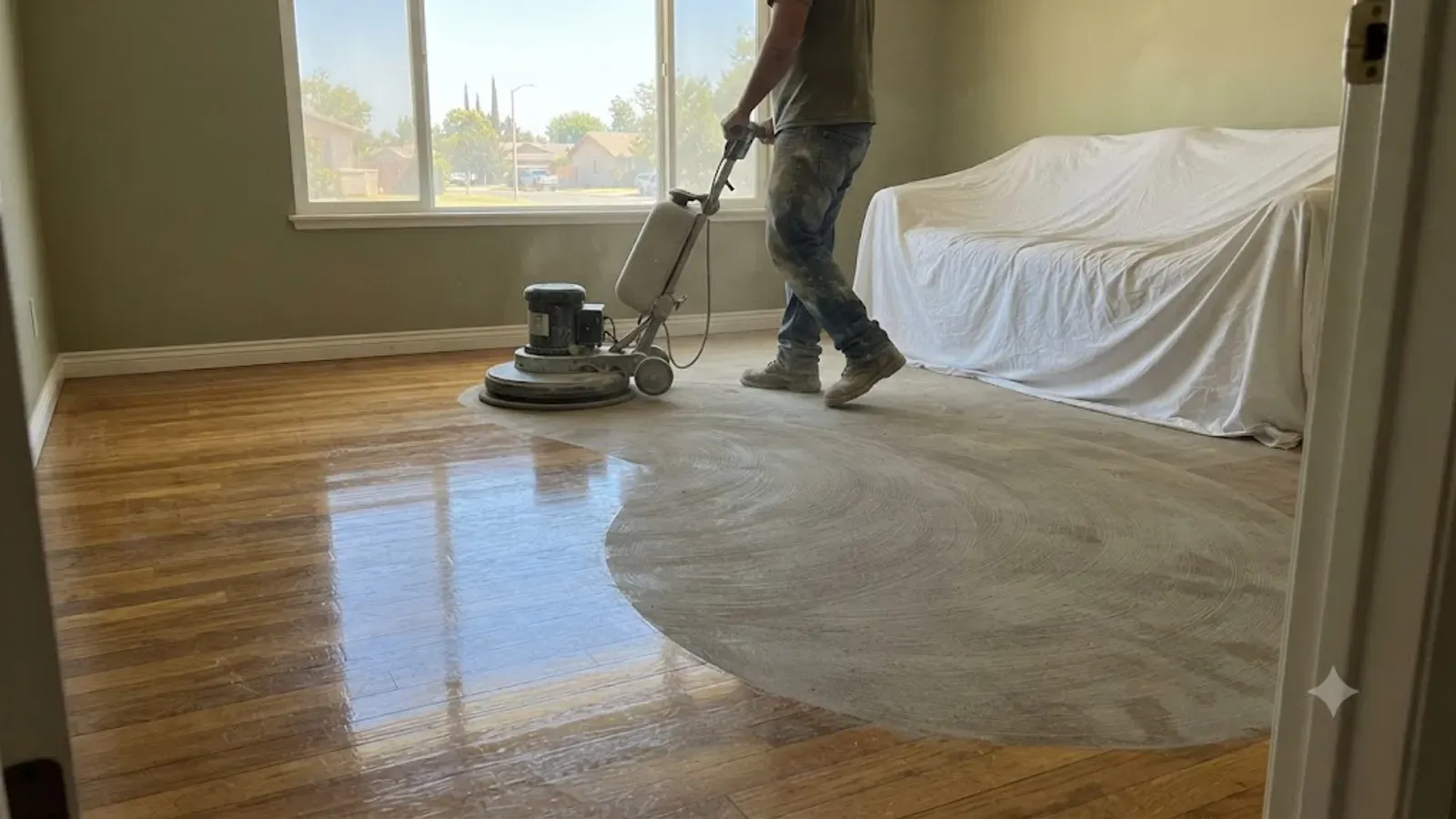
The difference is depth. A full refinish sands through the finish and into the wood, removing roughly a millimeter of board along with every scratch, stain, and gray patch in it. A screen and recoat abrades only the finish film — enough to give a new coat something to key into — and then rebuilds the film on top.
That means the two jobs solve different problems. A recoat fixes dullness, light surface scratching in the finish, and traffic-lane wear that has not yet reached the wood. It does nothing about deep gouges, stains that have penetrated the board, pet damage, or a floor you want a different color.
The test is simple and you can run it yourself. Find a worn area and look at it in raking light. If the wood there is still the same color as under the sofa, the wear is in the finish and a recoat will work. If the wood has gone gray or white where the finish is gone, the wear has reached the board and you need a full sand.
Cost tells the rest of the story. A recoat runs $1.60 to $2.40 per square foot against $3.25 to $5.50 for a refinish, and it is one day instead of three to five with almost no dust. On a 1,200 square foot floor that is roughly a $2,500 difference for a result most people cannot distinguish.
Deep Cleaning and Removing Product Residue
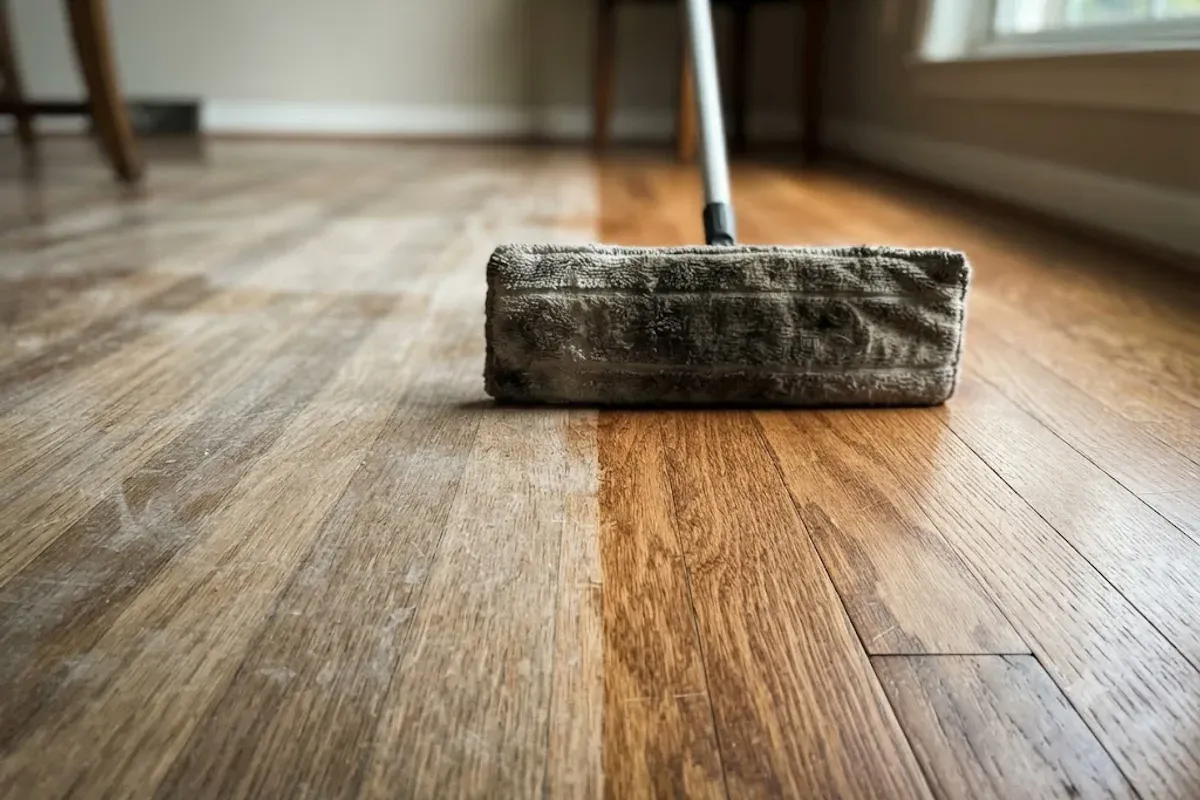
Before any recoat there is a cleaning step, and on a lot of Bakersfield floors it does more visible good than the coating does. Years of mop-and-shine products, oil soaps, and spray cleaners leave a film that dulls the finish and holds valley dust in it. People assume the floor is worn out. Frequently it is just dirty in a way household cleaning cannot reach.
We strip that with a professional wood floor cleaner and a driven pad, working in sections and picking up the slurry rather than letting it dry back down. The difference at the boundary between cleaned and uncleaned floor is usually dramatic enough that customers ask us to stop so they can take a photo.
This matters technically, not just cosmetically. Any residue left on the floor is a bond breaker — a new coat of finish laid over silicone or oil soap residue will not adhere, and it will peel in sheets within a year. Recoat failures are almost always adhesion failures, and adhesion failures are almost always inadequate cleaning.
Which is why we do a bond test on any floor with an unknown maintenance history. We clean, abrade, and coat a small out-of-the-way patch, let it cure, and try to lift it with tape. If it fails, the floor needs a full sand instead, and we would much rather find that out on a two-foot square than across your whole living room.
How Often Wood Floors Should Be Recoated
In a typical Bakersfield household, every five to seven years. Kitchens and entries go faster. A hallway with dogs and a back door might want it every three. A formal dining room nobody eats in might go a decade.
Staying on that schedule is the single cheapest way to own a wood floor. Every recoat resets the wear surface before it reaches the wood, which means the floor never actually needs a full sand. We have customers on their third recoat whose floors have never been sanded once — and every sanding cycle they save is one still in reserve for later.
There is a local variable worth naming. Valley dust is abrasive, particularly in the summer and during agricultural activity, and it works like sandpaper underfoot. Walk-off mats at every exterior door and regular dry dust-mopping do more for a finish here than any product you can buy.
The other one is furniture. Felt pads under every leg, replaced when they load up with grit, prevent most of the scratching that sends people to a full refinish early. It is the least interesting advice in this trade and the most consistently ignored.
How a Recoat Runs
- 1
Qualify the Floor
We check whether the wear has reached the wood. If the boards are gray or white in the traffic lane, a recoat is the wrong job and we say so.
- 2
Bond Test
On floors with unknown maintenance history, a small test patch gets cleaned, abraded, coated, and tape-tested for adhesion before we commit to the room.
- 3
Deep Clean
Professional cleaner and a driven pad to strip mop residue, oil soap, and ground-in dust. Slurry picked up wet, never allowed to dry back onto the floor.
- 4
Abrade the Existing Finish
A driven buffer with an abrasive screen scuffs the whole surface so the new coat has something to key into. Edges and corners done by hand.
- 5
Vacuum and Tack
Full vacuum plus a tack pass immediately before coating. A single grain of grit under finish is permanent and visible.
- 6
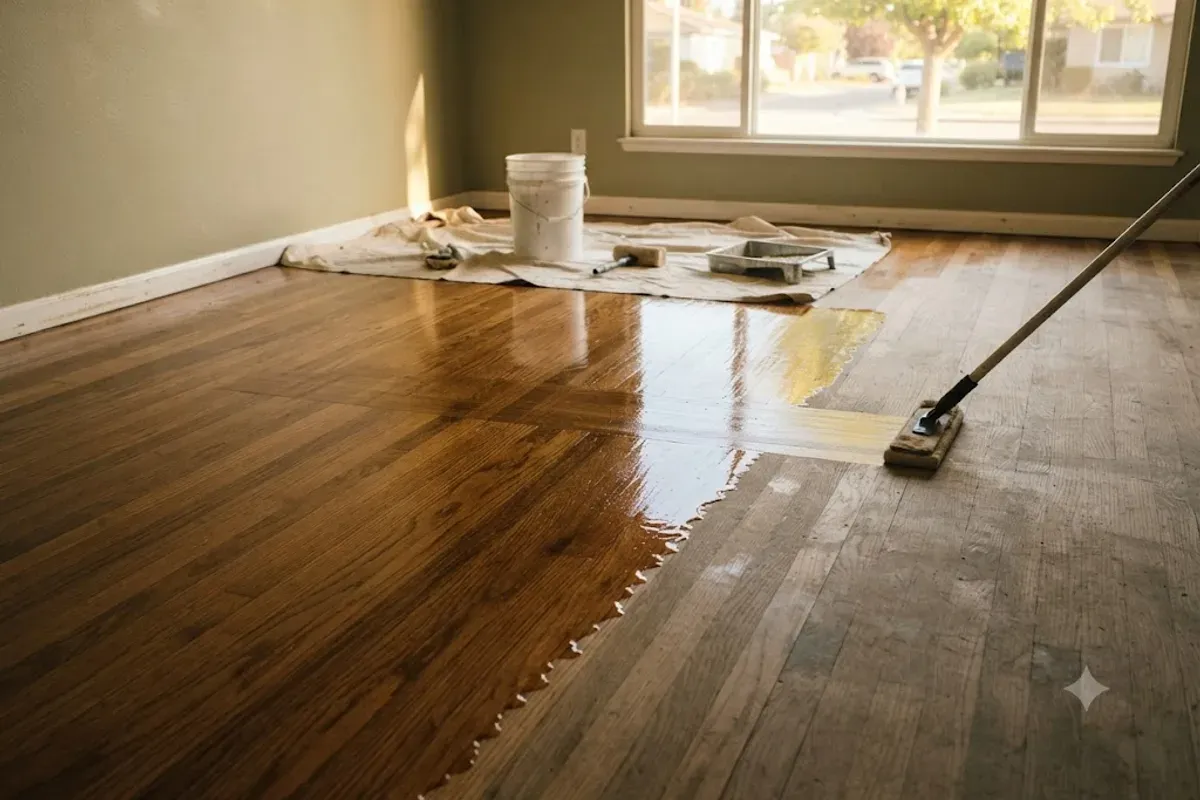
Two Fresh Topcoats
Waterborne finish applied in two coats with an abrasion pass between. Socks the same evening, furniture back in a few days.
Deep Cleaning and Recoating — Common Questions
How much does a screen and recoat cost in Bakersfield?
+
How do I know if my floor can be recoated?
+
How often should hardwood floors be recoated?
+
Why do some recoats peel?
+
Can you recoat a floor with a wax finish?
+
Get a Free Recoat Assessment
We will run the raking-light test on your floor and tell you the honest answer, including when the cheaper job is the right one. Mon-Fri 7am-5pm, Sat 8am-2pm.